
Reach Zone Architecture
Primary and secondary reach zones are calculated based on arm extension parameters and seated positioning. Tools and materials are categorized by access frequency and positioned accordingly.

Primary Zone
Optimal range extends 40-60cm from seated position. High-frequency tools and active materials are positioned within this radius for minimal movement overhead.

Secondary Zone
Extended reach area from 60-90cm. Used for less frequently accessed items. Requires minimal torso rotation for access.
Lumen Level Configuration
Lighting systems are calibrated to provide adequate illumination without visual fatigue. Multiple light sources are coordinated to eliminate shadows and reduce eye strain during extended sessions.
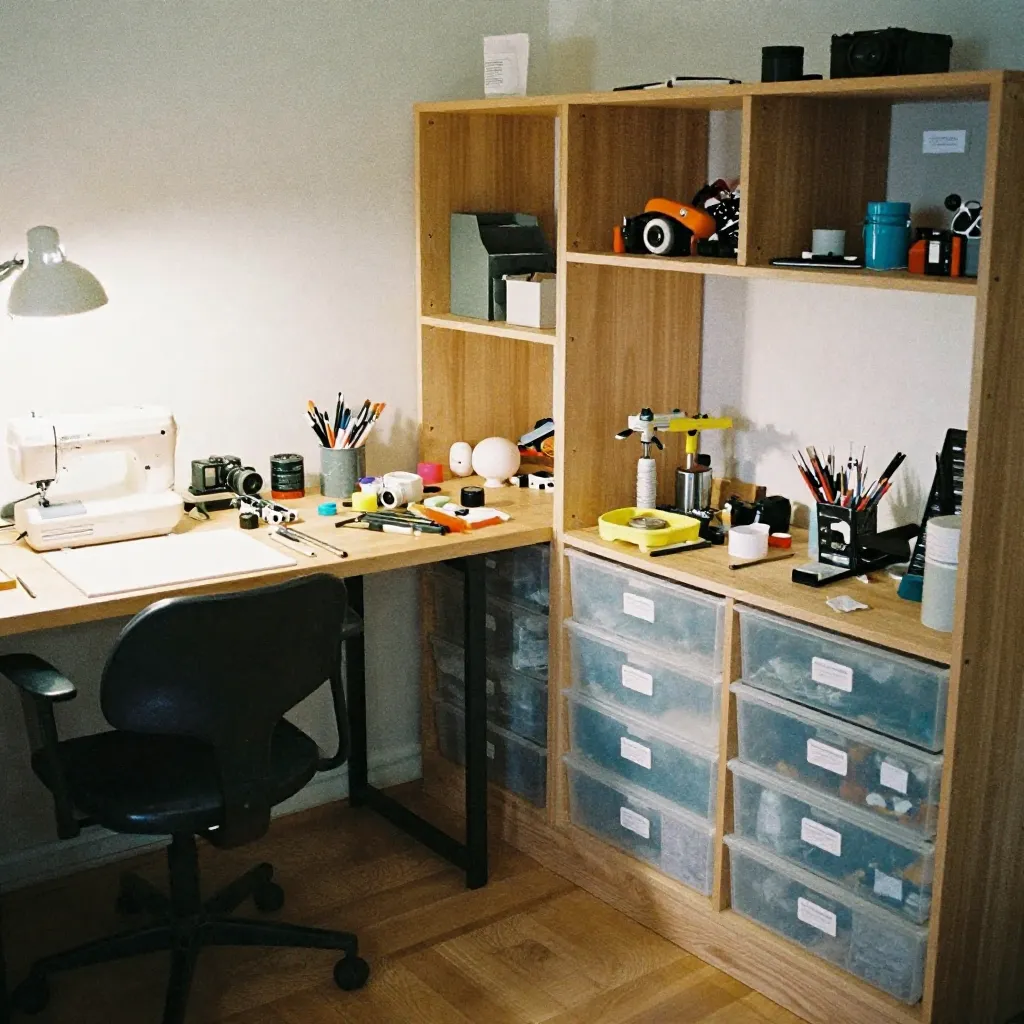
Ambient Illumination
Base lighting level maintains 300-500 lux across the workspace. Provides general visibility without creating harsh contrasts.
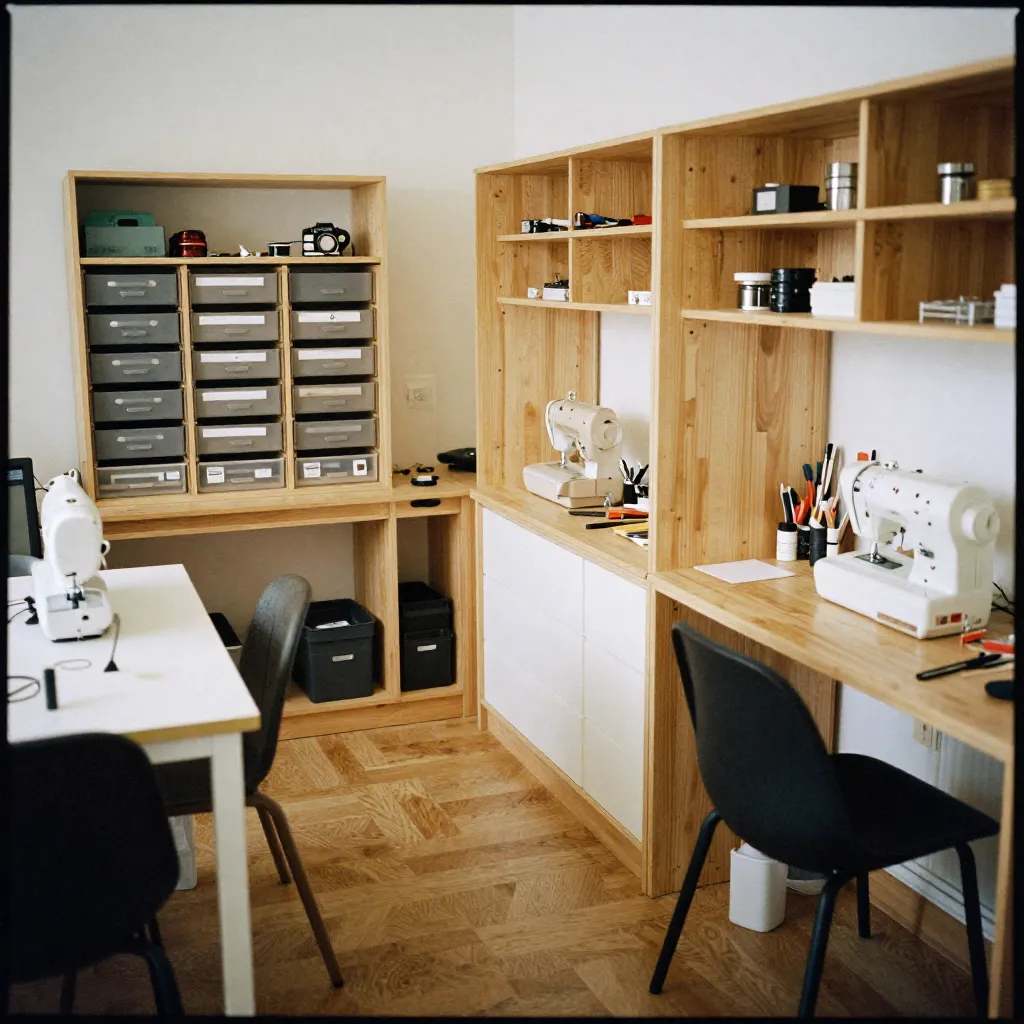
Task-Specific Lighting
Focused illumination increases to 750-1000 lux at work surfaces. Adjustable fixtures allow precise control over intensity and angle.
Postural Alignment Systems
Biometric support structures are positioned to maintain neutral spine alignment. Seat height, desk elevation, and monitor positioning are coordinated to prevent musculoskeletal strain.

Seating Configuration
Seat height adjusted so feet rest flat on floor. Thighs parallel to ground. Lumbar support maintains natural spinal curve.

Surface Elevation
Work surface positioned to allow forearms to rest parallel to ground. Elbows maintain 90-degree angle when hands are on surface.
Extended Session Parameters
For operations exceeding two hours, additional considerations are applied. Micro-break protocols, dynamic positioning adjustments, and visual rest intervals are integrated into the system design.
All configurations include recommendations for periodic repositioning and movement sequences to maintain circulation and prevent static posture fatigue.